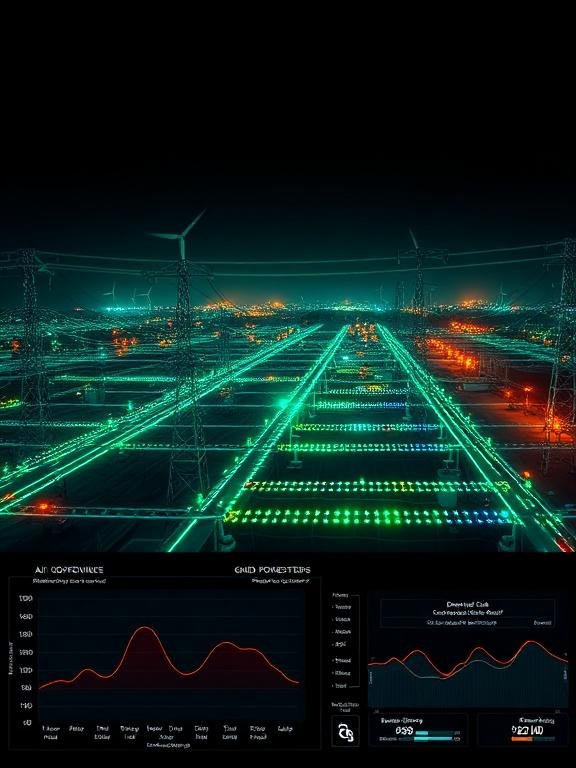
Intelligent operations
AI-powered asset management, grid optimization, and demand forecasting for utilities and energy companies. Predict failures before they happen, optimize generation, and accelerate the energy transition.
From reactive maintenance to predictive operations
AI in the energy and utilities sector encompasses grid optimization, asset health monitoring, predictive maintenance, demand forecasting, and ESG analytics that improve grid reliability, reduce outage duration, and optimize renewable energy integration. These solutions enable data-driven decision-making across generation, transmission, and distribution operations at enterprise scale.
Our Energy AI Platform brings predictive intelligence to asset management, grid operations, and customer engagement. IoT sensor data, SCADA systems, and weather feeds combined with advanced ML for actionable operational intelligence.
From transmission operators to retail energy providers — AI solutions that improve reliability, reduce costs, and support the energy transition with data-driven decision-making.
AI for energy operations
From generation to distribution to retail — intelligence at every stage.
Asset Intelligence
Digital twins, condition monitoring, and remaining useful life prediction for critical infrastructure. Optimize maintenance schedules based on actual asset health, not time-based intervals.
Predictive Maintenance
ML models trained on vibration, temperature, pressure, and electrical signature data. Predict equipment failures 30-90 days in advance with actionable maintenance recommendations.
Grid Optimization
Real-time load balancing, voltage optimization, and DER integration management. AI that handles the complexity of bidirectional power flow and intermittent generation.
Demand Forecasting
Short-term and long-term load forecasting with weather, calendar, and economic signals. Optimize generation scheduling, procurement, and capacity planning with accurate demand predictions.
ESG Analytics
Carbon emissions tracking, renewable generation optimization, and sustainability reporting automation. Meet regulatory and stakeholder ESG commitments with verified data.
Smart Metering
AMI data analytics, consumption pattern analysis, theft detection, and customer segmentation. Turn metering data into revenue protection and customer engagement opportunities.
Energy AI deployment
From IoT data capture to operational intelligence.
Data Infrastructure
Connect IoT sensors, SCADA systems, historian databases, and weather feeds into a unified data platform. Time-series optimization for high-frequency operational data.
Asset Modeling
Build digital twins and failure prediction models for critical assets. Train on historical failure data combined with real-time sensor streams for accurate remaining-life estimates.
Operational Intelligence
Deploy grid optimization, demand forecasting, and maintenance scheduling algorithms. Integrate with existing ADMS, EMS, and work management systems.
ESG & Reporting
Implement carbon tracking, renewable optimization, and automated sustainability reporting. Connect operational data to ESG frameworks and regulatory requirements.
Scale & Automate
Expand from pilot assets to fleet-wide deployment. Automate routine decisions while maintaining human oversight for critical operations and safety-relevant actions.
Energy AI Impact
Frequently asked questions
AI in the energy and utilities sector encompasses grid optimization, asset health monitoring, predictive maintenance, demand forecasting, and ESG analytics. These solutions improve grid reliability, reduce outage duration, optimize renewable energy integration, and enable data-driven decision-making across generation, transmission, and distribution operations.
AI-powered grid optimization uses real-time load balancing, voltage optimization, and distributed energy resource (DER) integration management to handle the complexity of bidirectional power flow and intermittent renewable generation. These systems improve grid efficiency by up to 15% while maintaining reliability standards across transmission and distribution networks.
Predictive maintenance for energy assets uses ML models trained on vibration, temperature, pressure, and electrical signature data from IoT sensors and SCADA systems. These models predict equipment failures 30–90 days in advance, enabling condition-based maintenance that reduces unplanned downtime by 40% and extends asset lifespan through optimized maintenance scheduling.
AI-driven ESG analytics automates carbon emissions tracking, renewable generation optimization, and sustainability reporting. It connects operational data to ESG frameworks and regulatory requirements, providing verified emissions data, Scope 1-3 tracking, and automated report generation that meets stakeholder and regulatory commitments.
Deploying AI in an energy company follows a 5-phase methodology: data infrastructure, asset modeling, operational intelligence, ESG reporting, and fleet-wide scaling. Predictive maintenance pilots on critical assets can be operational in 8–12 weeks, while full grid optimization and ESG analytics deployment typically takes 4–6 months including integration with ADMS, EMS, and work management systems.
Ready to modernize energy operations?
From predictive maintenance to grid optimization — AI solutions designed for the unique reliability, safety, and regulatory demands of the energy sector.